













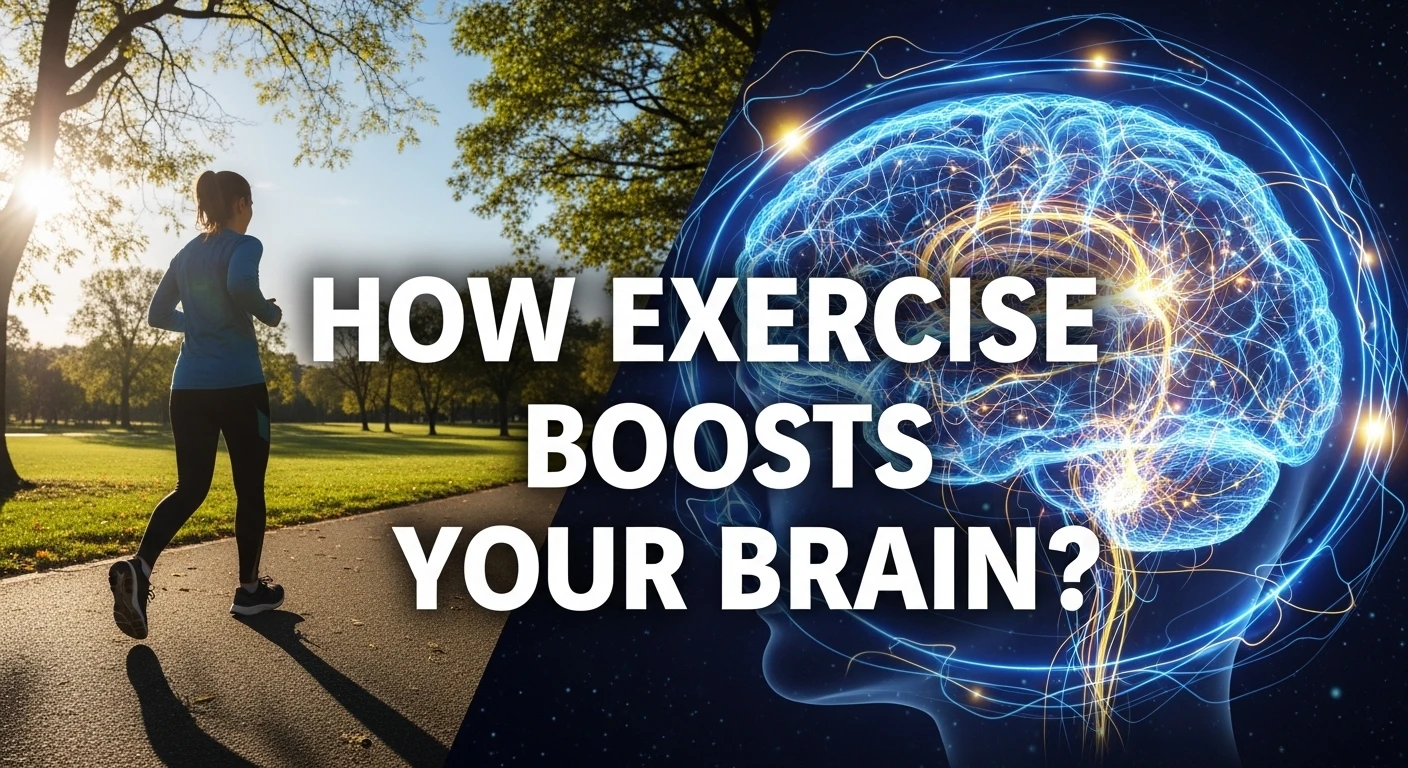

If you really want to know how physical exercise improves your brain, there’s something remarkable about the way movement and thinking are connected. Most people understand that exercise is good for the body—that’s the easy part. But what actually happens in your brain when you go for a run or lift weights or even just take a walk around the block, that’s where things get interesting in a way that doesn’t get talked about enough.
The relationship between physical exercise and brain function isn’t some vague wellness concept. It’s measurable, it’s documented, and it’s been playing out in research labs and real-world situations for decades now. What we’ve learned is that your brain responds to physical activity almost immediately, and over time, those responses compound into something that fundamentally changes how you think, remember, and process the world around you.
What Actually Happens in Your Brain During Exercise and how it makes your brain better
When you start moving—really moving, not just fidgeting—your heart rate goes up, blood flow increases, and more oxygen gets pumped to your brain. That’s the mechanical part. But there’s a cascade of chemical changes happening at the same time that most people don’t see or feel in the moment.
Your brain starts producing more of something called brain-derived neurotrophic factor, or BDNF. Think of it as fertilizer for your brain cells. It helps neurons grow, connect, and communicate more effectively. The thing is, this isn’t a metaphor. BDNF literally supports the survival of existing neurons and encourages the growth of new ones, particularly in areas like the hippocampus, which handles memory and learning.
At the same time, exercise triggers the release of various neurotransmitters—dopamine, serotonin, norepinephrine. These are the chemicals that regulate mood, attention, and motivation. So when people say they feel clearer or more focused after a workout, that’s not just a subjective feeling. There’s actual chemistry behind it.
The Chemistry Behind Better Thinking
The immediate effects are one thing, but the longer-term chemical changes are where physical exercise really starts to reshape your brain. Regular physical activity actually increases the volume of certain brain regions. Studies using MRI scans have shown that people who exercise consistently tend to have larger hippocampal volumes compared to sedentary individuals. That matters because the hippocampus shrinks naturally as we age, and that shrinkage is linked to memory decline.
There’s also what happens with inflammation. Chronic low-level inflammation in the brain is increasingly understood to be connected to cognitive decline, depression, and neurodegenerative diseases. Exercise, particularly aerobic exercise, has anti-inflammatory effects throughout the body, including the brain. It doesn’t eliminate inflammation entirely—that wouldn’t even be desirable—but it helps regulate it in a way that keeps things balanced.
And then there’s the vascular component. Your brain needs a steady supply of oxygen and nutrients, which means it needs good blood flow. Exercise strengthens and maintains the network of blood vessels in your brain, which helps protect against vascular dementia and stroke. In some respects, you’re basically giving your brain better infrastructure to work with.
Memory and Learning Get Sharper
Here’s something that shows up pretty clearly in research: people who exercise regularly tend to perform better on memory tests. This isn’t about being smarter in some general sense. It’s more about the brain’s ability to encode new information, store it, and retrieve it when needed.
Part of this goes back to BDNF and neurogenesis—the creation of new neurons. The hippocampus is one of the few areas of the adult brain where new neurons continue to form, and physical exercise is one of the most reliable ways to promote that process. When you’re learning something new or trying to remember information, having a healthy, well-functioning hippocampus makes a real difference.
There’s also evidence that exercise improves what’s called executive function—things like planning, problem-solving, multitasking, and impulse control. These are the higher-order cognitive processes that let you navigate complex situations. Regular physical activity seems to strengthen the prefrontal cortex, which is the brain region most involved in executive function.
What’s interesting is that the timing matters. Some studies suggest that exercising shortly before or after learning something new can enhance how well that information gets consolidated into memory. The mechanisms aren’t completely understood yet, but it likely has to do with the heightened state of neural plasticity that exercise creates.
Where the Long-Term Changes Show Up
If you keep exercising consistently over months and years, the structural changes in your brain become more pronounced. Gray matter volume increases in certain regions. White matter integrity improves—that’s the connective tissue that lets different brain areas communicate with each other.
One of the more compelling findings comes from longitudinal studies that track people over decades. Individuals who maintain regular physical activity throughout midlife and into older age show significantly slower rates of cognitive decline compared to those who remain sedentary. The protective effect is substantial enough that some researchers consider exercise to be one of the most effective interventions we currently have against age-related cognitive deterioration.
There’s also some indication that exercise may reduce the risk of developing Alzheimer’s disease and other forms of dementia. The data isn’t conclusive enough to make absolute claims, but the pattern is there across multiple studies. People who exercise regularly seem to have a lower incidence of these conditions, and when they do develop them, the progression often appears slower.
Why This Matters More as You Get Older
The brain changes with age—that’s just how it works. Certain regions shrink, neural connections weaken, processing speed slows down. But physical exercise appears to slow, and in some cases partially reverse, several of these changes.
Older adults who engage in regular aerobic exercise show improvements in cognitive function that sedentary individuals don’t experience. We’re talking about measurable differences in memory, attention, and processing speed. And these aren’t small effects. In some studies, the cognitive performance of active older adults rivals that of sedentary people who are decades younger.
The hippocampus thing is particularly relevant here. Research has shown that even older adults who start exercising for the first time can see an increase in hippocampal volume within a year or so. That’s significant because it suggests the brain retains plasticity—the ability to change and adapt—even in later life, as long as you give it the right stimuli.
There’s also the falls and injury component. Exercise improves balance, coordination, and reaction time, which are all regulated by the brain. Better neural control over movement means fewer falls, which means less risk of traumatic brain injury in older age. It’s more or less a feedback loop where physical and cognitive health reinforce each other.
The Anxiety and Depression Connection
This is where things get a little more complicated, but in a way that’s worth understanding. Exercise has been shown to reduce symptoms of anxiety and depression in a lot of people. Not everyone, and not as a replacement for therapy or medication when those are needed, but the effect is real and fairly well-documented.
Part of it comes down to those neurotransmitters we talked about earlier—dopamine, serotonin, norepinephrine. Depression and anxiety are often linked to imbalances or dysfunction in these systems, and exercise helps regulate them. Some research suggests that regular physical activity can be as effective as antidepressant medication for mild to moderate depression, though that’s a generalization and individual responses vary widely.
There’s also something about the stress response. Exercise is, technically, a form of stress on the body. But it’s a controlled, predictable stress, and your body adapts to it. Over time, that adaptation seems to make you more resilient to other kinds of stress—psychological, emotional, whatever. Your stress response becomes more calibrated, less likely to overreact to everyday challenges.
And then there’s the simple fact that moving your body often makes you feel better in the moment. The endorphin rush is real, though it’s probably not the whole story. It’s more likely a combination of endorphins, endocannabinoids, reduced muscle tension, and the psychological benefit of doing something active and intentional for yourself.
How Much Exercise Your Brain Actually Needs
The question everyone asks is, how much do you actually need to do to see these benefits? The honest answer is that it varies, but there are some general patterns.
Most of the research suggests that moderate aerobic exercise—think brisk walking, jogging, cycling—for about 150 minutes per week is enough to produce meaningful cognitive benefits. That works out to 30 minutes a day, five days a week, which is basically the same recommendation you’d get for cardiovascular health.
But you don’t have to hit that target perfectly to see results. Even shorter bouts of activity seem to help. One study found that 10-minute walks improved mood and cognitive performance in the hours afterward. Another showed that people who exercised just once or twice a week still had better cognitive outcomes than those who didn’t exercise at all.
Intensity matters, but probably not as much as consistency. High-intensity interval training might give you some additional cognitive benefits compared to steady-state cardio, but the difference isn’t enormous. What really seems to matter is that you do something regularly, week after week, month after month.
What Kind of Movement Works Best
There’s no single perfect form of exercise for brain health. Aerobic exercise—running, swimming, cycling—has the most research behind it, particularly when it comes to promoting BDNF production and neurogenesis. But resistance training, like lifting weights, also shows cognitive benefits, especially for executive function and memory.
Activities that combine physical movement with cognitive demands—things like dancing, martial arts, or sports that require strategy and coordination—might offer additional advantages. You’re not just moving your body; you’re also learning patterns, making decisions, and adapting to changing situations. That kind of multitasking engages multiple brain systems at once.
There’s also mounting evidence that yoga and tai chi, which combine movement with breath control and focused attention, can improve cognitive function and reduce stress. The mechanisms might be slightly different—less about cardiovascular intensity, more about mindfulness and body awareness—but the outcomes are still beneficial.
What works best is probably whatever you’ll actually do consistently. The ideal exercise for your brain is the one you can sustain over time, not the one that looks best on paper but burns you out after three weeks.
The reality is that your brain is built to support a body that moves. For most of human history, survival required constant physical activity—hunting, gathering, traveling, building. Our brains evolved in that context, and they still respond to movement as if it’s essential information about the environment and our place in it.
When you exercise, you’re not just maintaining your body. You’re actively upgrading your brain’s hardware and software at the same time. You’re giving it the resources it needs to build new connections, regulate its chemistry, and protect itself against decline. That’s really what it comes down to—movement isn’t a bonus for the brain, it’s kind of fundamental to how the whole system works best.
Further Reading:
- Harvard Medical School: Exercise and the Brain
- National Institutes of Health: Physical Activity and Brain Health
Related Topics:
- How sleep quality affects cognitive performance
- The connection between diet and brain function
- Neuroplasticity and lifelong learning strategies