















QUICK ANSWER
In short, the benefits of cardio training include improved heart health, increased lung capacity, weight management, reduced stress, better sleep, and longer life expectancy. Regular cardio exercise — even 150 minutes per week — produces measurable physical and mental health improvements backed by decades of scientific research.
WHAT IS CARDIO TRAINING?
Millions of people lace up their sneakers every day without fully understanding what cardio training actually does to their bodies — or why it’s considered one of the single most important forms of exercise a human being can do.
The benefits of cardio training extend far beyond simply burning calories. The term “cardio” is short for cardiovascular training — any sustained, rhythmic movement that elevates your heart rate and keeps it elevated for a period of time. Walking, running, cycling, swimming, dancing, jump rope, and rowing are all classic examples.
Definition — Cardiovascular Training: Exercise that raises and sustains your heart rate, strengthening the heart muscle, improving circulation, and increasing the body’s ability to use oxygen efficiently.
Cardio training works by repeatedly challenging your heart and lungs to pump more blood and oxygen to working muscles. Over time, your heart becomes more efficient — it pumps more blood per beat, your resting heart rate drops, and your entire cardiovascular system operates with less strain. Furthermore, the metabolic effects ripple out to virtually every organ system in your body.
According to the American Heart Association, adults who engage in regular aerobic exercise significantly reduce their risk of heart disease, stroke, type 2 diabetes, and certain cancers. The evidence is not just compelling — it’s overwhelming.
Source: American Heart Association — AHA Recommendations for Physical Activity in Adults
In addition, cardio training is one of the most accessible forms of exercise on the planet. You don’t need a gym membership, expensive equipment, or a personal trainer. You simply need to move consistently and with enough intensity to challenge your cardiovascular system.
Best Beginner Workout Routines for Mental and Physical Health
WHO IS BEHIND IT / WHO SUPPORTS CARDIO TRAINING?
The science behind cardio training is not new, and it comes from some of the most respected institutions in the world.
The World Health Organization recommends that adults aged 18 to 64 engage in at least 150 to 300 minutes of moderate-intensity aerobic activity per week, or 75 to 150 minutes of vigorous-intensity activity.
Source: World Health Organization — Physical Activity Fact Sheet
The Centers for Disease Control and Prevention, the American College of Sports Medicine, and virtually every major health authority on the planet back these recommendations with decades of peer-reviewed research. Landmark studies from Harvard Medical School and the Mayo Clinic have repeatedly confirmed that cardio training extends lifespan, improves quality of life, and reduces healthcare costs.
Physical inactivity is the fourth leading risk factor for global mortality, responsible for an estimated 3.2 million deaths annually, according to the World Health Organization.
Importantly, the fitness industry — from certified personal trainers to cardiologists — universally agrees: cardio training is non-negotiable for long-term health. As a result, it forms the foundation of nearly every evidence-based fitness and wellness program in existence today. This isn’t a trend. It’s one of the most evidence-backed recommendations in all of medicine.
WHO QUALIFIES / WHO BENEFITS MOST?
The remarkable thing about cardio training is its universal applicability. Almost anyone can benefit — regardless of age, current fitness level, or health status.
Eligibility Criteria
You don’t need to qualify for cardio training the way you might for a medical procedure. However, certain groups see the most dramatic improvements.
Sedentary individuals — People who currently do little to no exercise see the fastest and most significant gains from beginning a cardio program. Even a modest 20-minute daily walk produces measurable health improvements within weeks.
People with chronic health conditions — Those managing type 2 diabetes, hypertension, high cholesterol, or mild depression are among those most recommended to incorporate cardio by their physicians.
Adults over 40 — As metabolism naturally slows and cardiovascular risk factors increase with age, regular aerobic exercise becomes critical for maintaining energy, managing weight, and protecting heart health.
Young adults and teens — Building a cardio habit early establishes cardiovascular fitness baselines that pay dividends for life.
If you have a pre-existing medical condition, it’s always smart to consult your doctor before starting a new exercise program. That said, physical inactivity is itself a significant health risk — so the question is rarely whether to start, but how.
Types of Harm That Qualify as Motivation
Understanding what cardio training prevents is just as important as understanding its benefits. People who avoid regular aerobic exercise face elevated risks of coronary artery disease, obesity, metabolic syndrome, anxiety disorders, depression, cognitive decline, and premature death.
A 2019 study published in JAMA Internal Medicine found that replacing just 30 minutes of sitting with low-intensity activity was associated with a 17 percent reduction in mortality risk. That is not a small number.
Furthermore, the mental and emotional costs of a sedentary lifestyle are increasingly recognized by the medical community. Depression, chronic fatigue, poor concentration, and low self-esteem are all significantly more common in people who do not engage in regular cardio activity.
Internal Link Suggestion: Exercise and Mental Health: How Movement Heals the Mind
KEY BENEFITS OF CARDIO TRAINING IN 2026
This is where the research truly becomes remarkable. Here are the six most significant and well-documented benefits of cardio training — each backed by peer-reviewed science.
1. Stronger Heart and Lower Blood Pressure
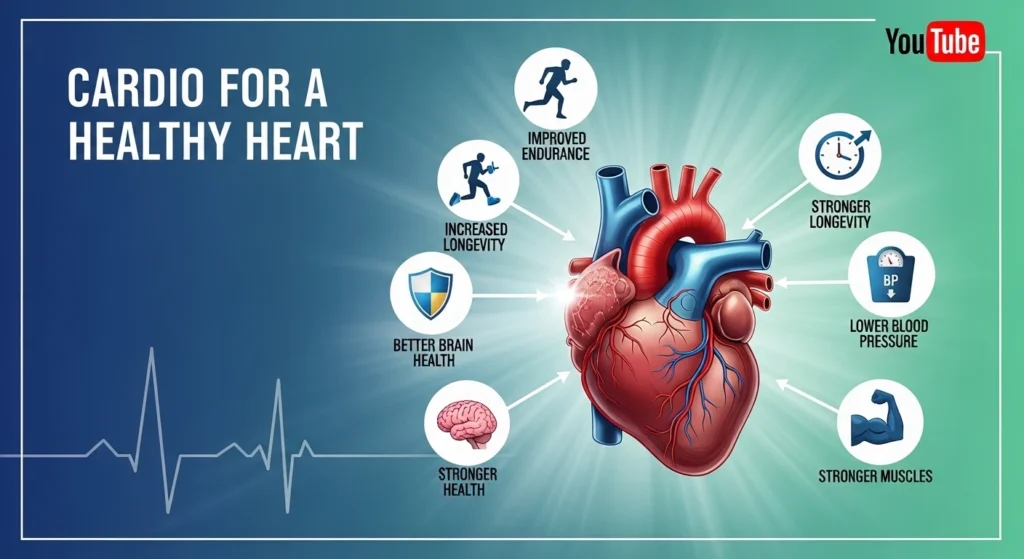
The most direct benefit of cardio training is a healthier heart. Your heart is a muscle, and like any muscle, it gets stronger when you train it. Regular aerobic exercise lowers resting heart rate, reduces blood pressure, improves cholesterol profiles by raising HDL — the good cholesterol — and reduces arterial stiffness. The American Heart Association estimates that heart disease, largely preventable through lifestyle, remains the leading cause of death in the United States.
2. Weight Management and Metabolic Health
Cardio training burns calories during exercise and elevates metabolism for hours afterward — a phenomenon known as EPOC, or Excess Post-Exercise Oxygen Consumption. Moreover, regular cardio improves insulin sensitivity, which is critical for managing blood sugar levels and reducing type 2 diabetes risk. For people managing weight, cardio is an indispensable tool — not because it alone causes weight loss, but because it creates the caloric and metabolic conditions that make fat loss sustainable.
3. Dramatically Improved Mental Health
One of the most underappreciated benefits of cardio training is its profound effect on mental health. Exercise triggers the release of endorphins, serotonin, dopamine, and brain-derived neurotrophic factor — a protein sometimes called Miracle-Gro for the brain. Multiple large-scale studies have found that regular aerobic exercise is as effective as antidepressant medication for treating mild-to-moderate depression. In addition, cardio significantly reduces anxiety, improves stress resilience, and enhances cognitive function, including memory and focus.
4. Better Sleep Quality
Struggling to fall asleep or stay asleep? Research consistently shows that people who exercise regularly — particularly through aerobic activity — fall asleep faster, spend more time in deep sleep, and wake up feeling more rested. The benefits of cardio training on sleep are particularly significant for people dealing with insomnia or sleep-related anxiety.
5. Increased Energy and Reduced Fatigue
This might seem counterintuitive — working your body harder to have more energy — but it’s one of the most consistently reported outcomes of regular cardio training. By improving cardiovascular efficiency and mitochondrial function in your cells, cardio makes everyday activities feel easier. Climbing stairs, carrying groceries, playing with children — all become less taxing as your baseline fitness improves.
6. Longer Life Expectancy
A landmark meta-analysis published in The Lancet found that people who exercised at recommended levels had a 35 percent lower risk of all-cause mortality compared to sedentary individuals. That’s not a small effect. Regular cardio training is one of the most powerful life-extension tools available — and it’s free.
Source: Centers for Disease Control and Prevention — Physical Activity Basics for Adults
WHAT CAN YOU REALISTICALLY EXPECT?
Setting realistic expectations is critical to sticking with a cardio program long enough to see results.
Weeks 1 to 2: You’ll likely feel tired, sore, and perhaps a bit discouraged. This is normal. Your body is adapting. Stick with it.
Weeks 3 to 4: Your resting heart rate begins to drop. Workouts start feeling slightly easier. You may notice improved mood and better sleep.
Months 2 to 3: Visible changes in body composition may begin. Energy levels during the day increase noticeably. Blood pressure improvements are measurable at this point in many people.
Months 4 to 6: Significant cardiovascular fitness gains are established. Many people report dramatically improved mental clarity, lower stress levels, and stronger motivation to continue. Weight management becomes more stable.
Year 1 and beyond: Your cardiovascular risk profile has measurably improved. The habit is established. The benefits of cardio training compound over time — the longer you train consistently, the more powerful the results.
Importantly, results vary based on frequency, intensity, duration, and individual biology. However, research makes one thing clear: almost everyone who begins and sustains a cardio training program experiences meaningful, measurable health improvements.
HOW TO START CARDIO TRAINING (STEP-BY-STEP)
Starting a cardio routine doesn’t require a gym membership or expensive equipment. Here’s how to begin — intelligently and safely.
Step 1 — Get Medical Clearance if Needed
If you’re over 45, have a chronic condition, or haven’t exercised in years, speak with your doctor before starting. Most people will get a green light — but it’s worth confirming.
Step 2 — Choose Your Activity
Pick something you can realistically sustain. Walking, cycling, and swimming are excellent low-impact options. Running, dancing, and HIIT are higher intensity. Start with what feels manageable.
Step 3 — Start Small, Much Smaller Than You Think
Begin with just 15 to 20 minutes, three times per week. This is not a sign of weakness — it’s strategic. Building the habit before building the intensity is the key to long-term success.
Step 4 — Use the Talk Test
For moderate-intensity cardio, you should be able to hold a broken conversation but not sing. For vigorous-intensity cardio, speaking more than a few words should feel difficult. This simple test helps you gauge effort without a heart rate monitor.
Step 5 — Add 10 Percent Per Week
Increase duration or frequency by no more than 10 percent per week. This is the widely accepted guideline for avoiding injury while steadily progressing.
Step 6 — Track Your Progress
Use a fitness app, journal, or wearable device to log your sessions. Tracking creates accountability and gives you visible proof of improvement — which is enormously motivating.
Step 7 — Rest and Recover
Include at least one to two rest days per week. Cardio adaptation happens during recovery, not during the workout itself. Sleep and nutrition are equally important components of your training program.
Step 8 — Build Consistency Over Intensity
The single most important factor in gaining the benefits of cardio training is consistency over months and years — not the intensity of any single workout. Show up. Keep going. The results will follow.
FREQUENTLY ASKED QUESTIONS
Q: What are the main benefits of cardio training?
A: The main benefits of cardio training include improved heart health, lower blood pressure, weight management, enhanced mental health, better sleep, increased energy, and a longer lifespan. Regular aerobic exercise reduces risk of heart disease, type 2 diabetes, depression, and certain cancers. Even 150 minutes per week produces significant results.
Q: How often should I do cardio to see results?
A: Most health organizations recommend at least 150 minutes of moderate-intensity cardio per week — roughly 30 minutes, five days a week. Beginners should start with three sessions of 15 to 20 minutes and gradually build up. Consistency over weeks and months produces the most meaningful and lasting results.
Q: Can cardio training help with weight loss?
A: Yes. Cardio training burns calories during exercise and boosts metabolism afterward through EPOC. Combined with a nutritious diet, regular cardio is one of the most effective tools for sustainable fat loss. However, cardio alone without dietary changes produces limited weight loss results for most people.
Q: Is cardio training good for mental health?
A: Absolutely. Cardio exercise triggers the release of endorphins, serotonin, and dopamine — neurotransmitters that regulate mood. Research shows regular aerobic exercise is as effective as antidepressant medication for mild-to-moderate depression. It also significantly reduces anxiety and improves cognitive function, including memory and focus.
Q: What type of cardio training is best for beginners?
A: Walking is the best starting point for most beginners — it’s low-impact, free, and accessible. Cycling and swimming are excellent alternatives for those with joint issues. The best cardio is whatever you’ll actually do consistently. Start with 20 minutes three times per week and progress from there.
Q: How long does it take to see the benefits of cardio training?
A: Most people notice improved mood and slightly better sleep within the first two to three weeks. Measurable fitness improvements like lower resting heart rate and improved endurance typically appear within four to eight weeks. Body composition changes and cardiovascular risk improvements usually become apparent after three to six months of consistent training.
Q: Can I do cardio training every day?
A: You can do low-to-moderate intensity cardio daily if you vary the intensity and allow adequate recovery. However, high-intensity cardio every day without rest increases injury risk and can lead to overtraining syndrome. Most experts recommend three to five cardio sessions per week, with one to two rest or active recovery days.
Q: Does cardio training slow aging?
A: Research strongly suggests yes. Regular aerobic exercise lengthens telomeres — a biological marker of cellular aging — improves mitochondrial function, and reduces systemic inflammation, all of which are associated with slower biological aging. Studies show regular exercisers have cardiovascular profiles decades younger than their sedentary peers.
CONCLUSION
The benefits of cardio training are not just real — they are among the most thoroughly documented outcomes in all of medical science. A stronger heart, a sharper mind, better sleep, a healthier weight, and a longer life are not promises; they are proven outcomes supported by decades of research from the world’s leading health institutions.
Three things matter most: start where you are, build consistency before intensity, and understand that the compound effect of showing up repeatedly over months and years is what unlocks the full power of cardio training.
You don’t need to run a marathon. You don’t need to suffer. You need to move — regularly, deliberately, and with the knowledge that every session is an investment in a healthier, longer, more energized version of yourself. Start today.
SOURCES AND EXTERNAL REFERENCES
- American Heart Association — AHA Recommendations for Physical Activity in Adults
- World Health Organization — Physical Activity Fact Sheet
- Centers for Disease Control and Prevention — Physical Activity Basics for Adults